St John's Wort and Ashwagandha for Mood and Stress: What the Research Actually Shows
Quick Answer: Do St John's Wort and Ashwagandha Help Mood and Stress?
To a real but bounded extent, and for the right person. A large Cochrane review found St John's Wort more effective than placebo and comparable to standard antidepressants for mild-to-moderate low mood, with fewer side effects. Ashwagandha has a growing set of small trials showing reduced perceived stress and anxiety in healthy adults. Neither works overnight, neither treats a severe or diagnosed condition, and St John's Wort in particular carries serious drug interactions that make medical advice essential before you start.
- Strongest finding: St John's Wort for mild-to-moderate low mood.
- Most promising for stress: ashwagandha, in small randomised trials.
- Key caveat: St John's Wort interacts with many drugs — check first.
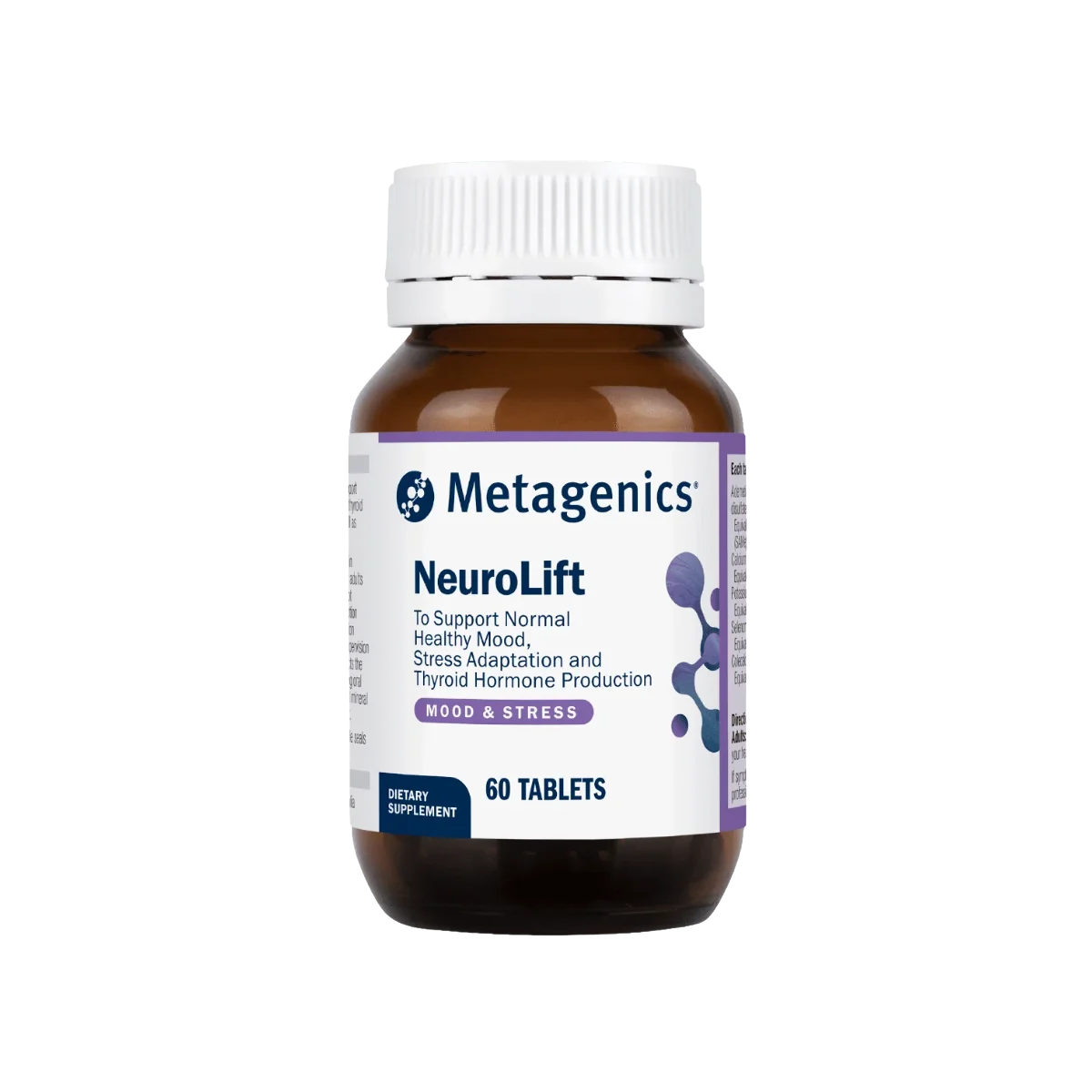
St John's Wort: the best-studied herbal antidepressant
St John's Wort (Hypericum perforatum) is one of the most researched herbal remedies in existence. Its most-cited compound is hypericin, and extracts are usually standardised to it, though hyperforin also appears to matter. The landmark evidence is a Cochrane systematic review that pooled 29 trials and concluded that Hypericum extracts were superior to placebo and about as effective as standard antidepressants for major depression of mild-to-moderate severity — with notably fewer people stopping treatment because of side effects (Linde and colleagues, Cochrane Database of Systematic Reviews).
Two honest caveats sit alongside that. First, the strong results came disproportionately from German-speaking countries, where prescribing culture and product quality may differ, and product-to-product variability is real. Second, and more importantly, the evidence is for mild-to-moderate low mood, not severe depression, and self-treating a serious mood disorder with a supplement is a genuinely bad idea.
The interaction problem you cannot ignore
St John's Wort is a potent inducer of the liver's drug-metabolising enzymes, which is why it is the single most important interaction warning on this page. It can lower the blood levels — and therefore the effectiveness — of the contraceptive pill (unplanned pregnancies have been reported), warfarin and other blood thinners, some heart and anti-seizure medicines, HIV antiretrovirals, and transplant immunosuppressants. Combined with SSRIs and other antidepressants it can push serotonin too high, causing serotonin syndrome. None of this makes it dangerous in isolation — it makes it a herb you never combine with medication without professional advice, a warning repeated in plain language by NIH NCCIH on St. John’s Wort.
Ashwagandha and Rhodiola: the adaptogens
The stress side of the formula rests on two adaptogens. Ashwagandha (Withania somnifera) has the better evidence: several small randomised, placebo-controlled trials report reductions in perceived stress and anxiety scores in healthy but stressed adults, sometimes with measurable drops in cortisol (NIH NCCIH on ashwagandha). Rhodiola rosea has been studied for stress-related fatigue and mental tiredness, with promising but smaller and less consistent results (NIH NCCIH on Rhodiola). In both cases the trials are short and modest in size, so the honest summary is "encouraging, not settled" — and the effect builds over weeks.
What the evidence supports, in one table
| Ingredient | What the research supports |
|---|---|
| St John's Wort | Mild-to-moderate low mood; comparable to antidepressants in trials (Cochrane) |
| Ashwagandha | Reduced perceived stress and anxiety in small randomised trials |
| SAMe | Long-standing evidence for low mood, mostly at higher doses |
| Rhodiola | Stress-related fatigue; smaller, mixed trials |
| Iodine & selenium | Needed for normal thyroid hormone production — only help if you are deficient |
St John’s Wort vs ashwagandha: which one does what?
St John’s Wort and ashwagandha are not competing versions of the same thing — they answer different complaints, which is why formulas so often carry both. The shortest way to separate them is by the symptom that sent you looking: low mood points to St John’s Wort, a wound-up stress response points to ashwagandha.
St John’s Wort acts on mood itself. Its trial record sits squarely in mild-to-moderate low mood, it is measured on depression rating scales, and its effect is compared against antidepressants rather than against relaxation. Ashwagandha acts on the stress response. Its trials measure perceived stress, anxiety scores and often morning cortisol in people who are healthy but stretched, and what participants describe is usually a lower baseline of tension rather than a brighter mood.
That difference has a practical consequence. If your problem is a flat, joyless fortnight, ashwagandha is the wrong tool and no amount of it will fix that. If your problem is a racing mind at 11pm during a hard quarter at work, St John’s Wort brings a heavy interaction burden for a benefit aimed somewhere else. For anxiety specifically, ashwagandha has the more direct evidence of the two, though the trials remain small and short.
| Question | St John’s Wort | Ashwagandha |
|---|---|---|
| Primary target | Low mood | Perceived stress and anxiety |
| Evidence base | Large, pooled in a Cochrane review | Several small randomised trials |
| Typical trial length | 4 to 12 weeks | 8 to 12 weeks |
| Drug interaction risk | High — induces liver enzymes | Low, but caution in thyroid and autoimmune conditions |
| Common complaint | Photosensitivity | Stomach upset, drowsiness |
Can you take St John’s Wort and ashwagandha together?
Taking St John’s Wort and ashwagandha together is common, and no direct interaction between the two herbs has been established — but the safety question is not really about the pair. It is about everything else you already take, because St John’s Wort is the ingredient that changes how other drugs behave.
Combination products carrying both are widely sold, and the reasoning is straightforward: one ingredient is aimed at mood, the other at the stress response, and the two complaints usually arrive together. What that convenience does not remove is the need to clear St John’s Wort with whoever prescribes your medicines. If you take an antidepressant, the contraceptive pill, a blood thinner, an anti-seizure drug, an HIV antiretroviral or a transplant immunosuppressant, whether you can take St John’s Wort with ashwagandha is decided entirely by that first drug, not by the ashwagandha.
Two smaller cautions belong to ashwagandha itself. It has been associated with rare reports of liver injury, and because it may nudge thyroid hormone levels it deserves a conversation first if you have a thyroid condition or take levothyroxine. Neither is a reason for a healthy adult to avoid it; both are reasons to mention it at your next appointment rather than assume a herb is automatically neutral.
The order to do this in: check your medication list first, then decide about the herbs. Doing it the other way round is how people discover an interaction after they have already started.
How long do these herbs take to work?
Neither herb is a same-day ingredient, and expecting one is the most common reason people conclude a formula does nothing. St John’s Wort trials generally run four to twelve weeks and report separation from placebo somewhere after the first two to four weeks; ashwagandha trials typically run eight to twelve weeks, with stress scores drifting down gradually rather than dropping. A realistic first checkpoint is week four, and a fair verdict is available at week eight — the same pattern that governs most botanical ingredients, set out in more detail in our timeline of how long nootropics take to work.
Consistency matters more than timing precision. Taking a dose most days for eight weeks beats taking it perfectly for ten days and then forgetting, because these are cumulative effects rather than acute ones. Keeping a one-line note of sleep and mood makes the difference visible; without it, a slow twenty per cent improvement is almost impossible to notice from the inside.
Doses used in the research, and what labels actually contain
The gap between a studied dose and a label dose is where most disappointment in this category is manufactured. St John’s Wort trials typically used 300 mg of extract three times a day, standardised to around 0.3 per cent hypericin; ashwagandha trials have most often used 300 to 600 mg a day of a concentrated root extract; SAMe research on mood generally sits at several hundred milligrams a day, far above the amount most combination tablets carry.
This is why reading the panel matters more than reading the front of the bottle. A combination product can name every studied ingredient and still deliver a fraction of the studied amount of each, and a proprietary blend can hide which fraction. Working out what you are actually swallowing is the single most useful skill in this aisle, and it is the method behind our buyer’s guide to brain supplements and our comparison of brain support supplement ingredient forms, where the same arithmetic decides which products survive.
One more label habit is worth borrowing: check whether the herb is described as dry herb or as extract, and at what ratio. Four hundred and fifty milligrams of herb and 450 mg of a concentrated extract are entirely different quantities of active compound, and the two are printed in the same font.
Who should not take St John’s Wort at all
Some people should skip this herb regardless of how good the mood evidence looks, and the list is short enough to check in a minute. Anyone taking an antidepressant, the contraceptive pill, warfarin or another anticoagulant, an anti-seizure medicine, an HIV antiretroviral, a transplant immunosuppressant or certain heart and cancer medicines should not start St John’s Wort without their prescriber’s explicit agreement.
Beyond the drug list: pregnancy and breastfeeding are not situations to experiment in, bipolar disorder carries a risk of a mood switch, and planned surgery is a reason to stop well in advance because of anaesthetic and bleeding interactions. Fair-skinned people should also know about photosensitivity, which is a real and under-mentioned effect — St John’s Wort can make sunburn arrive faster than you expect.
Where the evidence stops
Two limitations are worth stating plainly. First, a finished multi-ingredient supplement is not the same as any single studied dose — the ingredients can have evidence while the specific product has never been trialled, and the amounts in a tablet may be lower than the studies used (SAMe is the clearest example). Second, none of this treats a diagnosed illness. St John's Wort is not a treatment for severe depression, ashwagandha is not a treatment for an anxiety disorder, and iodine and selenium correct a deficiency rather than treat thyroid disease, which is the distinction the NIH Office of Dietary Supplements iodine fact sheet draws as well. If your symptoms are persistent or serious, the right next step is a clinician, not a supplement.
Medical note: this article is general information, not medical advice. St John's Wort interacts with many prescription medicines, including the contraceptive pill and antidepressants. Speak to a doctor or pharmacist before starting any supplement that contains it, and especially if you are pregnant, nursing or taking any medication.
Scientific references
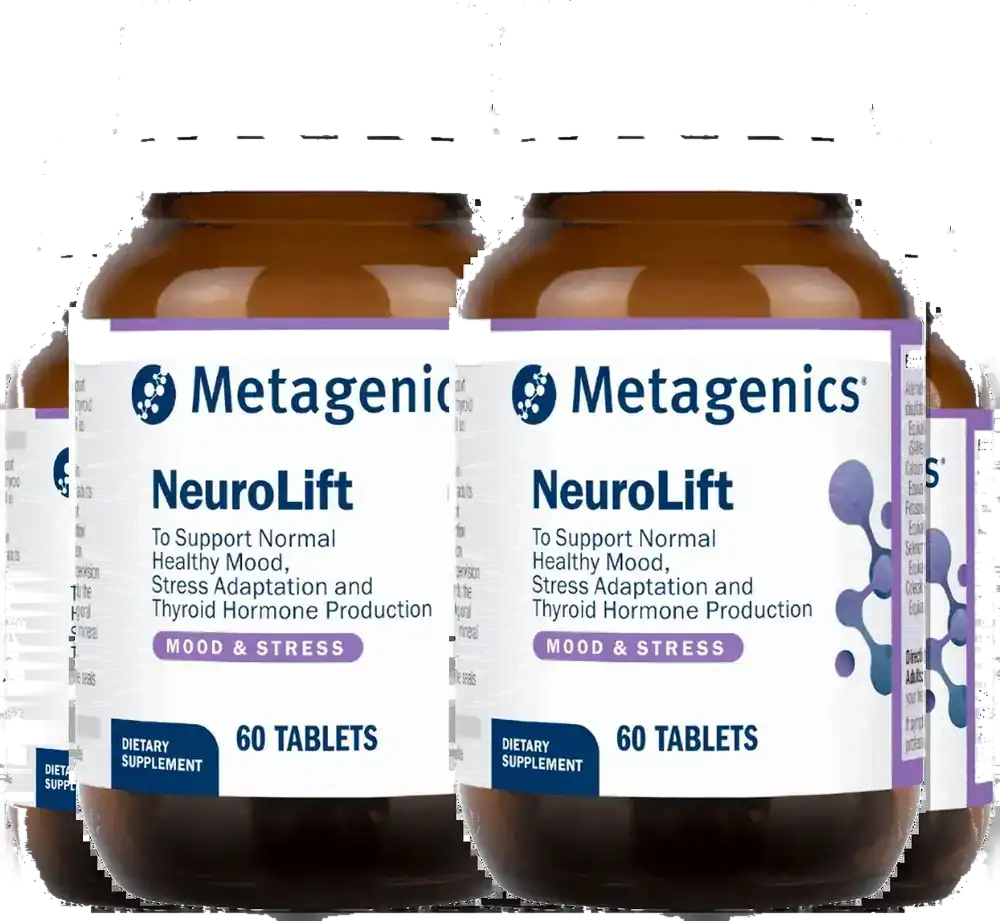
See how Neuro Lift puts this together
SAMe, St John's Wort and two adaptogens in one twice-daily tablet — with every ingredient, dose and interaction laid out.
Read the Neuro Lift Review