Best Brain Support Supplement Forms: Alpha-GPC and Choline Sources Compared
Quick Answer: Which Choline Form Should You Look For?
Compare choline sources on elemental choline yield, not on the number printed on the front of the bottle. Alpha-GPC is about 40 per cent choline by weight and choline bitartrate about 41 per cent, while citicoline is roughly 18 per cent and phosphatidylcholine about 13 per cent, so a 500 mg capsule of each delivers a very different amount of the thing you are buying. Alpha-GPC has the most direct human dosing research, bitartrate is the cheapest way to raise total intake, and food, especially eggs, is still the most reliable source of all.
- Elemental yield: alpha-GPC ~40%, bitartrate ~41%, citicoline ~18%, phosphatidylcholine ~13%.
- Adequate intake: 550 mg/day for men, 425 mg/day for women.
- Upper limit: 3,500 mg/day of total choline for adults.

Why choline is on so many brain support labels
Choline earns its place for an unusually concrete reason. It is the direct precursor of acetylcholine, the neurotransmitter most associated with attention, learning and memory encoding, and it is also a structural building block of phosphatidylcholine, which makes up a large share of every cell membrane you own. A third role is quieter but just as important: choline is oxidised to betaine, which donates a methyl group in the same one-carbon pathway that folate and vitamin B12 work in.
That triple role is why choline was formally classified as an essential nutrient in 1998, with an adequate intake of 550 mg a day for adult men and 425 mg a day for adult women. National survey data consistently show most people take in less than that, mainly because the densest common sources are eggs and organ meats and both have spent decades out of fashion. A genuine gap in a genuinely essential nutrient is a far better reason to supplement than any claim about unlocking your brain.
What follows is a comparison of the four forms you will actually meet on a label, and the reason a shopper looking for the best brain support supplement has to do a little arithmetic before comparing prices.
The number that decides everything: elemental choline yield
Every choline supplement is a molecule of choline attached to something else, and that something else takes up weight. Choline bitartrate is choline bound to tartaric acid. Alpha-GPC is choline attached to a glycerophosphate backbone. Citicoline is choline attached to cytidine via a diphosphate bridge. Phosphatidylcholine is choline as part of a full phospholipid, complete with two fatty acid tails.
The heavier the attachment, the less choline you get per milligram. That single fact reorders most of the category. Two capsules that both say "500 mg" on the front can differ by more than a factor of two in the amount of choline they deliver, and the more expensive one is often the one delivering less.
Choline forms compared by weight, dose and evidence
| Form on the label | Elemental choline by weight | 500 mg supplies about | Doses used in human studies | Evidence strength |
|---|---|---|---|---|
| Choline chloride | ~74% | ~370 mg choline | Mostly used to correct intake, not as a nootropic | Nutritional, not cognitive |
| Choline bitartrate | ~41% | ~205 mg choline | Commonly 250–500 mg in blends | Weak for cognition; fine for raising intake |
| Alpha-GPC | ~40% | ~200 mg choline | 400 mg three times daily in older trials; 600 mg single dose in performance work | Moderate, mostly in older or clinical groups |
| Citicoline (CDP-choline) | ~18% | ~90 mg choline | 250–500 mg daily in healthy-adult trials | Moderate but short trials, small samples |
| Phosphatidylcholine | ~13% | ~65 mg choline | Gram-scale; often from lecithin | Weak for cognition |
| Egg (dietary) | — | One large egg ≈ 147 mg choline | Not a dose, a food | Strongest, because it is the reference intake source |
Read the last row again. Two eggs supply roughly the same elemental choline as a 700 mg alpha-GPC capsule, at a fraction of the cost and with the protein, lutein and B12 attached. That is not an argument against supplementing, it is the baseline any supplement should be measured against.
Not every brain formula is built on choline
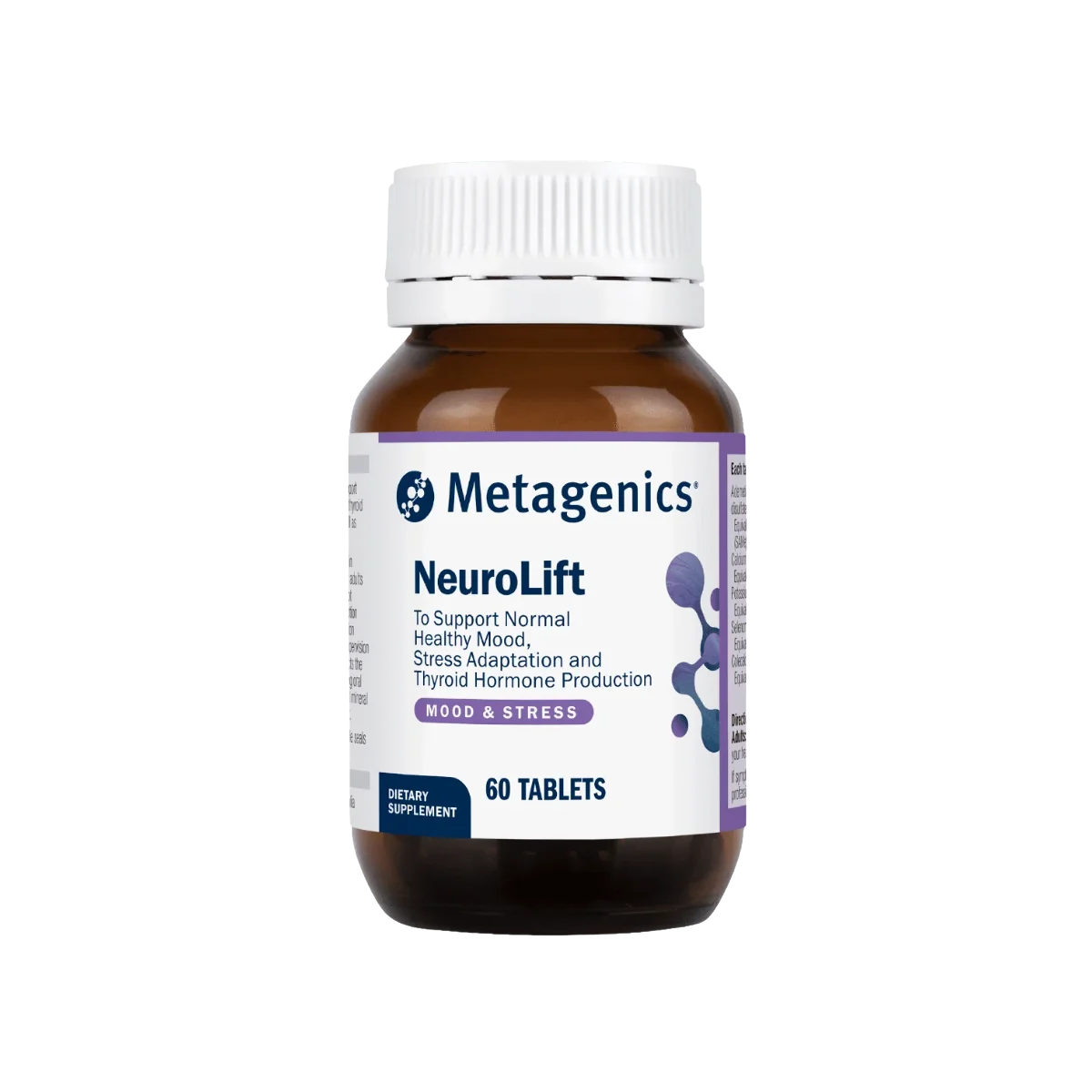
Neuro Lift takes the methylation route instead — SAMe and folinic acid, with iodine and selenium for thyroid hormone production and four botanicals for mood and stress. Every amount is itemised on the panel, which is the first thing to check whenever you buy brain health supplements.
Check Availability & PricingAlpha-GPC: what the human studies actually used
Alpha-GPC, or L-alpha-glycerylphosphorylcholine, is the choline form with the most direct human dosing history. The bulk of that history comes from European work in older adults with cognitive decline, typically at 400 mg three times a day for six months. A separate, much smaller strand of work has looked at single doses around 600 mg before physical performance tests, where the interest is in acetylcholine at the neuromuscular junction rather than in memory.
Three honest observations about that evidence base. It is older than most people assume, with several key trials dating from the 1990s. It was conducted mainly in populations who already had cognitive impairment, which tells you little about a healthy thirty-five-year-old taking it for focus at work. And the daily amounts used, 1,200 mg in divided doses, are far above what most multi-ingredient blends carry — the dose-versus-label gap our buyer’s guide to the best brain supplements uses to rank products. They are far above what most multi-ingredient blends contain, where 150 to 300 mg is more typical. If a formula cites alpha-GPC research at 1,200 mg a day and then supplies 200 mg, the citation is decoration.
On tolerability, alpha-GPC is generally well tolerated, with headache, heartburn and occasional dizziness the most commonly reported complaints. Long-term safety data in healthy adults taking it purely for cognition are thin, which is worth saying out loud rather than assuming absence of evidence means absence of risk.
A supplement label that cites a study at 1,200 mg a day and then delivers 200 mg is not lying about the research. It is simply hoping you will not do the division.
Choline bitartrate: cheap, abundant and usually miscast
Choline bitartrate is the workhorse of the category. It is inexpensive, stable, and supplies a respectable 41 per cent choline by weight, which makes it an efficient way to close a dietary gap. What it does not have is much evidence of an acute cognitive effect in healthy people — a pattern that repeats across most of the category, as our primer on what nootropic supplements actually do sets out. Studies giving bitartrate to well-nourished adults and measuring memory or attention have generally been unimpressive.
The likely explanation is not that bitartrate is inferior chemistry but that raising choline intake in someone who is not short of choline does not do much. Bitartrate is a nutrition ingredient wearing a nootropic costume. Judged as nutrition it is perfectly good; judged as a performance ingredient it disappoints, and the disappointment is usually blamed on the form rather than on the premise.
Citicoline: the middle path, and its weight problem
Citicoline, also written CDP-choline, delivers both choline and cytidine, which the body can convert to uridine. That extra pathway is the theoretical case for it, and short trials in healthy adults, often at 250 to 500 mg a day for four to twelve weeks, have reported modest improvements in attention and psychomotor speed. The trials are small, brief, and several were industry-funded, so the fair grade is promising rather than proven.
Its weakness is arithmetic. At roughly 18 per cent choline by weight, a 250 mg dose supplies about 45 mg of elemental choline, a rounding error against a 425 to 550 mg daily requirement. If your goal is meeting your choline intake, citicoline is an expensive way to do it. If your goal is the cytidine and uridine side of the molecule, it is the only form that offers it. Deciding which of those you actually want is the whole decision.
What the best brain support supplement labels get wrong about choline
Four recurring errors show up on the shelf. The first is comparing raw milligrams across different forms, which the elemental yield column above dismantles. The second is the proprietary blend, where choline sits inside a 750 mg "focus matrix" with six other ingredients and no individual amounts, making the yield calculation impossible by design.
The third is stacking forms for the appearance of sophistication: a label listing bitartrate, citicoline and alpha-GPC at 50 mg each looks thorough and delivers less choline than half an egg. The fourth is citing research doses without matching them, which is the most common and the least forgivable, because it is the one error that requires the person writing the label to know better.
None of this makes the category worthless. It makes the itemised panel the only thing worth reading. Anyone comparing the best brain health supplement options across brands should build a single column of elemental choline per serving and sort by it; the ranking that produces rarely matches the ranking the marketing produces.
Food first: where dietary choline actually comes from
One large egg supplies roughly 147 mg of choline, almost all of it in the yolk, which makes eggs the single most practical lever for most people. Beef liver is dramatically denser still, at several hundred milligrams in a modest portion, though few people eat it weekly. Beyond those, chicken, fish, beef, soybeans, kidney beans, quinoa, cruciferous vegetables such as broccoli and Brussels sprouts, and shiitake mushrooms all contribute moderate amounts.
The people most likely to fall short are those eating little or no animal produce, pregnant and breastfeeding women whose requirements rise, and anyone on a long-term low-fat diet who has quietly cut yolks. Those are also the groups for whom a supplement makes the clearest sense, which is a very different proposition from taking alpha-GPC before a meeting.
Tolerability, the upper limit and who should be careful
The tolerable upper intake level for adults is 3,500 mg of total choline a day, and it exists because of a specific and memorable set of effects: at gram-scale intakes people report a fishy body odour, sweating, heavy salivation, nausea, loose stools and sometimes a drop in blood pressure. The odour comes from trimethylamine produced when gut bacteria act on unabsorbed choline.
That same bacterial step produces trimethylamine N-oxide, or TMAO, after the liver converts it. Observational research has linked higher TMAO levels to cardiovascular risk. The relationship is not settled and it is not a reason to avoid eggs, but it is a reason not to take multi-gram choline doses casually and indefinitely. If you take medication, are pregnant or nursing, or have a diagnosed condition, the sensible route is a conversation with a clinician rather than a comparison of capsule prices.
What choline supplements cannot do
Here is the limit, stated plainly. There is no good evidence that supplemental choline in any form prevents, treats or reverses dementia, Alzheimer's disease or any other neurological condition, and nothing in this article should be read as suggesting otherwise. The older alpha-GPC trials were conducted in people with existing cognitive decline and do not establish a preventive or curative effect for anyone.
Nor is there strong evidence that adding choline improves memory in healthy, well-fed adults. The most defensible reading of the literature is that correcting a shortfall helps and topping up an adequate intake does not, which is the same conclusion that applies to most nutrients. Choline will also not compensate for short sleep, and it will not counteract an untreated thyroid problem, iron deficiency or persistent low mood; those need testing and clinical advice.
Finally, a finished multi-ingredient product is not the same as any single studied dose. Ingredient evidence is not product evidence, and the honest version of this category admits that gap instead of papering over it. If you would rather avoid stimulants entirely while you work through the options, our guide to caffeine-free brain supplement labels covers the botanical names to watch for.
Medical note: this article is general information, not medical advice. Choline and its supplemental forms are nutrients, not treatments. Speak to a doctor or pharmacist before starting any supplement, and especially if you are pregnant, nursing, taking medication or managing a health condition.
Scientific references
- NIH Office of Dietary Supplements — Choline, Fact Sheet for Health Professionals
- NIH Office of Dietary Supplements — Choline, Consumer Fact Sheet
- Harvard T.H. Chan School of Public Health, The Nutrition Source — Choline
- Sagaro G.G. et al. (2023) — Activity of Choline Alphoscerate on Adult-Onset Cognitive Dysfunctions: A Systematic Review and Meta-Analysis, Journal of Alzheimer’s Disease
- NIH Office of Dietary Supplements — Vitamin B12 and one-carbon metabolism
See how a fully itemised panel reads
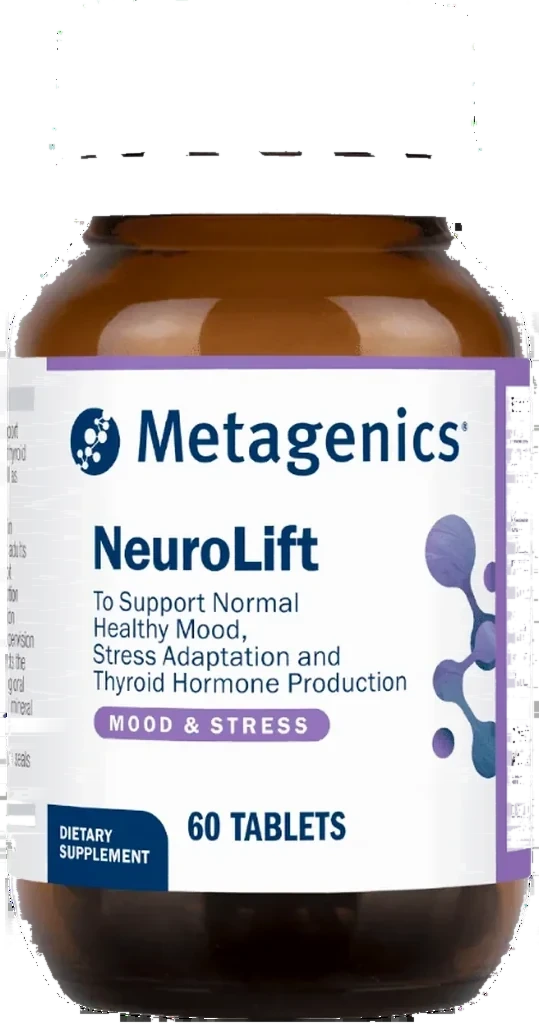
Neuro Lift lists SAMe, folinic acid, iodine, selenium, vitamin D3 and four standardised botanicals with individual amounts — no blends, no hidden splits. Read the full Neuro Lift ingredient breakdown first, then decide.
See Availability on the Official Store