Before the Best Brain Support Supplement for Kids: Sleep, Breakfast and Screens
Quick Answer: What Helps a Child Concentrate at School?
Three school-day inputs have far more evidence behind them than any supplement: enough sleep for the child's age, a breakfast built on protein and fibre rather than sugar alone, and screens that stop early enough not to push bedtime later. Sleep is the largest lever by a wide margin, and because evening screens mostly work by stealing sleep, fixing the screen routine is really a way of fixing sleep. Supplements belong after those three, and only where a clinician has found a genuine nutrient shortfall.
- Sleep: 9–12 hours for ages 6–12; 8–10 hours for ages 13–18.
- Breakfast: composition matters more than presence in a well-fed child.
- Screens: the timing of the last hour beats the daily total.

Sleep is the single biggest lever, and it is not close
If you change one thing this term, change bedtime. Sleep medicine guidance widely used by paediatricians puts school-age children at 9 to 12 hours a night between the ages of six and twelve, and teenagers at 8 to 10 hours between thirteen and eighteen. Those numbers are not aspirational rounding; they are the range within which attention, mood regulation and memory consolidation work as designed.
What makes sleep such a powerful lever is that its effects are experimental rather than merely observational. Studies that shorten children's sleep by an hour or so for a few nights, then restore it, show attention and behaviour moving in step. That design tells you something a survey cannot: the sleep is causing the change, not simply accompanying it. Chronic short sleep in children also tends to look like restlessness and irritability rather than obvious tiredness, which is why it is so often mistaken for a behaviour problem.
The practical trap is arithmetic. Parents work forwards from a bedtime that sounds reasonable instead of backwards from the alarm. A 7am wake-up with a ten-hour target means lights out at 9pm, which means starting the wind-down at 8.15pm, which means the last screen goes away around 8pm. Written that way, most family evenings suddenly look about forty-five minutes too long.
Nightly sleep by age, and what usually steals it
| Age | Recommended nightly sleep | Lights out for a 7am alarm | What usually steals it | First fix |
|---|---|---|---|---|
| 3–5 years | 10–13 hours including naps | Around 7.30–8pm | Late naps, drawn-out bedtime routines | Fixed routine, same order every night |
| 6–12 years | 9–12 hours | Around 8–9pm | Evening screens, homework creep, clubs | Devices out of the bedroom overnight |
| 13–18 years | 8–10 hours | Around 9–10.30pm | Phones, later body clock, early start times | Charge the phone outside the room |
| Any age | — | — | Snoring or pauses in breathing | Raise it with a doctor; do not treat it at home |
That last row is there deliberately. Loud habitual snoring, mouth breathing and observed pauses in breathing can fragment sleep badly enough to show up as daytime inattention, and it is a medical matter with an actual assessment behind it. No amount of routine-tightening or supplementing addresses it.
Breakfast composition beats breakfast presence
The evidence on breakfast is more nuanced than the cereal adverts suggest, and the nuance is the useful part. The clearest benefits show up in children who are undernourished or who habitually skip breakfast entirely; in those groups, eating something beats eating nothing by a comfortable margin. In well-nourished children who already eat in the morning, the effect of breakfast on attention tests is smaller and considerably less consistent.
Where composition comes in is the shape of the morning. A breakfast dominated by refined carbohydrate and sugar, say a sweetened cereal with juice, produces a fast rise in blood glucose and a correspondingly fast fall, and the fall tends to land somewhere around mid-morning lessons. Adding protein and fibre flattens that curve: eggs, plain yoghurt, beans on wholegrain toast, porridge with nuts and fruit, or last night's leftovers if that is what gets eaten. The aim is not a perfect plate, it is a slower one.
Two honest caveats. First, the cognitive effect of a better breakfast in an already well-fed child is modest, and anyone promising transformed grades from a change of cereal is overselling. Second, for teenagers who genuinely cannot face food at 7am, a mid-morning snack of similar composition is a reasonable substitute and a far easier argument to win.
Sorting out your own focus, not just theirs?
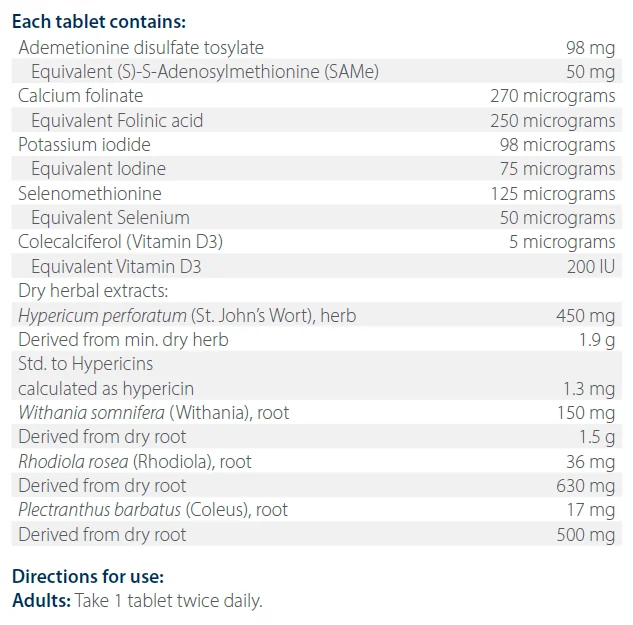
Neuro Lift is an adult twice-daily tablet built on SAMe, folinic acid, iodine, selenium and four botanicals, with every amount printed on the panel and no stimulants. It is not for children. If you have been comparing where to buy brain supplements for yourself, start there.
Check Availability & PricingScreens: the timing of the last hour beats the daily total
Screen time is usually argued about as a quantity, which is the least useful way to think about it. The best-supported mechanism connecting screens to next-day attention is displacement: screens push bedtime later, later bedtime shortens sleep, and short sleep degrades attention. On that account, ninety minutes after school is a completely different proposition from ninety minutes ending at 10.30pm, even though a weekly total reports them identically.
Two secondary mechanisms sit alongside displacement. Bright light in the evening can delay the body clock, shifting the time a child naturally feels sleepy, and this matters more for teenagers whose clocks have already drifted later. And content arousal is real: a competitive game or a group chat raises alertness at precisely the moment you want it falling. A device in the bedroom overnight combines all three, which is why removing it is the highest-yield single change most families can make.
A workable rule that survives contact with an actual household: screens off an hour before lights out, chargers live in the kitchen, and the rule applies to the adults too. Rules children see enforced only on themselves tend to be renegotiated nightly.
The nutrient gaps that genuinely change attention
Nutrition matters most when something is actually missing. Iron deficiency is the clearest example: it is among the most common nutrient deficiencies worldwide, it is associated with poorer attention and more irritability in children, and correcting a confirmed deficiency under medical supervision helps. It also cannot be diagnosed by guesswork, and iron supplements given without need carry real risks, which is exactly why iron is left out of most children's gummies.
Iodine is required for normal thyroid hormone production, and thyroid hormone is central to normal development and to everyday mental pace. Vitamin B12 shortfalls turn up in children on strict plant-based diets without fortified foods. Vitamin D is common enough at northern latitudes in winter that many countries advise routine supplementation for children, and the adult version of that same question is covered in our guide to vitamins for memory and focus. Omega-3 fats, whose adult dosing we set out in our guide to omega-3 DHA for brain health, have produced genuinely mixed results in children's cognition trials, with the more encouraging findings in children who started with low intakes.
The pattern is consistent across all of them: fixing a deficit helps, and topping up an adequate intake does not. That single sentence explains most of the disappointment in this category, and it is the reason a blood test is worth more than a shopping trip. If you are weighing up a chewable format for a child, our guide to the sugar and dose reality of brain gummies covers what actually fits in one.
Nothing in a jar competes with an hour of sleep. Nutrition helps most when something is genuinely missing, and it helps least when it is being asked to substitute for rest.
Where the best brain support supplement for kids actually fits
After the three inputs above, and after a conversation with a paediatrician or pharmacist. That is the honest answer, and it is the one most category pages avoid because it sells nothing. A supplement is a reasonable tool for closing a specific, identified gap: vitamin D through a dark winter, B12 on a plant-based diet, iron where a test has shown a deficiency, iodine where intake is poor.
It is not a reasonable tool for raising intelligence, improving grades or making a tired child alert, because no product has been shown to do those things in a well-nourished child. Parents searching for the best brain supplement for children are usually being offered certainty the evidence does not support, and the products advertising hardest tend to be the ones with least behind them. If you do buy something, apply the same standards you would to an adult product: every ingredient itemised with its amount, no proprietary blends, an age range that matches your child, third-party testing, and no health claim that a regulator would raise an eyebrow at. Judged on that basis, the best brain support supplement for kids is usually the plainest one a clinician has actually recommended, and often it is no supplement at all.
One more rule that should be obvious and often is not: adult formulas are not for children. Neuro Lift, the adult product this site covers, contains St John's Wort, which interacts with a long list of prescription medicines, and its directions are written for adults. You can read the full Neuro Lift ingredient breakdown to see exactly what an adult formula looks like, and why splitting one is not a way to make a children's dose.
A one-week school-night reset
Changing everything at once fails. Changing one thing a night for a week tends to hold. Night one: work out the real lights-out time by counting backwards from the alarm, and write it on the fridge. Night two: move all chargers out of bedrooms, adults included. Night three: set the screens-off time at one hour before lights out and put a visible clock in the room where the screens live.
Night four: plan three breakfasts that contain protein and fibre and that your child will genuinely eat, and buy for them. Night five: shift homework earlier, since homework creeping into the wind-down hour is the most common reason bedtime slips. Night six: add twenty minutes of outdoor activity after school, which helps both sleep pressure and morning light exposure. Night seven: change nothing and see what the week looked like.
Two weeks of that is a fair test. If attention at school has not improved and the sleep numbers are genuinely being hit, that is useful information to take to a doctor rather than to a checkout, because it points away from routine and towards something worth assessing.
What none of this can do
Sleep, breakfast and screen timing are the highest-yield inputs available to a family, and they are still not treatments. They do not treat, prevent or reverse attention deficit hyperactivity disorder, dyslexia, an anxiety disorder, a sleep disorder such as obstructive sleep apnoea, or any other condition, and neither does any supplement discussed on this page. If a child is struggling persistently despite adequate sleep and food, the next step is an assessment that can consider hearing, vision, learning needs, sleep-disordered breathing and mental health.
It is also worth saying that these levers vary in size between children, and a family already doing all three well should not expect much from tightening them further. The honest framing is that these inputs remove obstacles rather than add ability, and removing an obstacle only helps if the obstacle is there. Nothing on this page is medical advice, and any decision about supplements for a child should involve a qualified healthcare professional.
Medical note: Neuro Lift is an adult supplement and is not intended for children. It contains St John's Wort, which interacts with many prescription medicines including the contraceptive pill and antidepressants. This article is general information, not medical advice. Speak to a doctor, pharmacist or paediatrician before giving any supplement to a child, and about any persistent difficulty with attention or sleep.
Scientific references
- NIH NINDS — Brain Basics: Understanding Sleep
- NIH NHLBI — Sleep Deprivation and Deficiency
- Harvard T.H. Chan School of Public Health, The Nutrition Source — Carbohydrates and Blood Sugar
- Mayo Clinic — Sleep tips: Six steps to better sleep
- Gruber R. et al. (2012) — Impact of sleep extension and restriction on children's emotional lability and impulsivity, Pediatrics
For the adults in the house
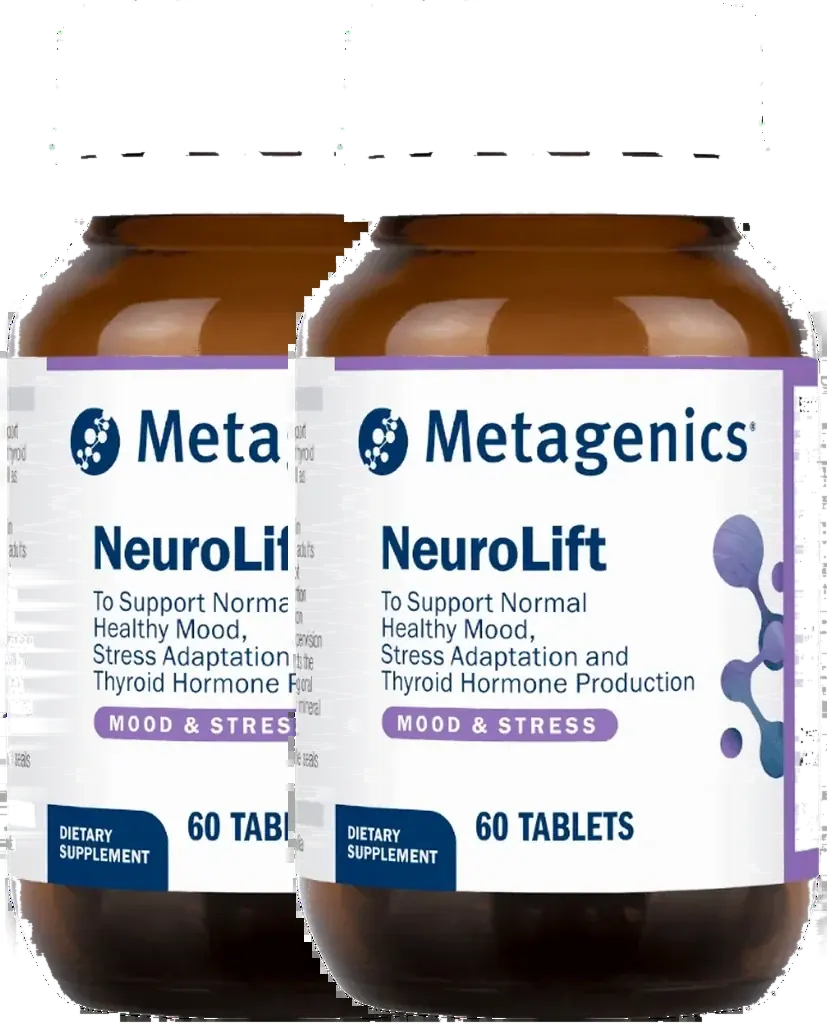
A twice-daily adult tablet with SAMe, folinic acid, iodine, selenium and four standardised botanicals — itemised, stimulant-free and easy to check against the label. Not for children.
See Availability on the Official Store