Best Brain Booster Supplement for Kids? The Gummy Sugar and Dose Reality
Quick Answer: Are Brain Gummies a Good Way to Supplement a Child?
For vitamins and minerals measured in micrograms, a gummy is a workable format. For the herbal extracts and omega-3 oils that "brain booster" marketing leans on, it usually is not, because a gummy only has a few hundred milligrams of space left once the sugar, gelatin, water, colour and flavour are accounted for. Add the sugar across a week and the supervision problem that comes with anything shaped like a sweet, and the format costs more than it looks.
- Sugar: read the panel and multiply by seven before you judge it.
- Space: gram-scale actives physically do not fit in a chewable.
- Safety: store like medicine; over-consumption is the real hazard.
What is physically inside a gummy
Start with the mass budget, because it explains almost everything else. A supplement gummy typically weighs somewhere between two and four grams. Of that, the largest components are sugar or glucose syrup, a gelling agent such as gelatin or pectin, water, an acidulant such as citric acid, plus colour, flavour and a coating to stop the pieces sticking together. What remains for active ingredients is a few hundred milligrams at the very most, and usually less once the formulator leaves room for the thing to actually set and taste acceptable.
That budget suits micronutrients perfectly. Vitamin D at 10 to 25 micrograms, vitamin B12 at a few micrograms, zinc at a handful of milligrams, iodine at 90 to 150 micrograms for a child: all of these disappear into a gummy without touching the sides. The format is not a scam for micronutrients. It is a genuinely useful way to get a vitamin into a child who will not swallow a tablet.
The problem arrives when the front of the pack promises brain support and the ingredients doing that work in the published research are measured in hundreds or thousands of milligrams. A gummy cannot carry those amounts, so it carries a token quantity instead and relies on the name being on the label rather than the amount being meaningful.
The sugar adds up faster than one gummy suggests
Sugar content varies widely between products, so the only honest approach is to read the nutrition panel on the pack in front of you and multiply. Here is the arithmetic, using an assumption rather than a measurement: if a gummy declares three grams of sugar and the daily serving is two gummies, that is six grams a day, forty-two grams across a week and roughly 180 grams across a month.
Set that against the widely used heart-health guidance that children aged two to eighteen should stay under about twenty-five grams of added sugar a day. A six-gram daily supplement takes about a quarter of that allowance before breakfast has happened, and unlike a biscuit it is positioned as a health product, so it rarely gets counted. Some children's gummies declare one gram; some declare four. The difference across a school year is substantial, and it is printed on the pack.
Sugar-free versions solve one problem and introduce another. They generally use sugar alcohols such as maltitol, sorbitol or xylitol, which are poorly absorbed and can cause bloating, wind and loose stools in children at doses adults tolerate fine. Xylitol has a separate household consideration: it is seriously toxic to dogs, so a jar left within reach of a curious child is also within reach of a curious spaniel.
How the formats compare
| Format | Typical sugar per daily serving | Room for active ingredients | Best suited to | Main drawback |
|---|---|---|---|---|
| Gummy / jelly | Commonly 1–4 g per piece, often two pieces | A few hundred mg at most | Vitamins and minerals in micrograms | Sugar load; looks like confectionery |
| Sugar-free gummy | Near zero sugar; sugar alcohols instead | Same as above | Children avoiding added sugar | Digestive upset; xylitol is a pet hazard |
| Chewable tablet | Usually under 1 g | Several hundred mg | Vitamins, some minerals | Chalky taste; still sweetened |
| Liquid or drops | Varies; often none | Good, dose is adjustable | Vitamin D, omega-3, younger children | Measuring errors; taste; refrigeration |
| Powder in a drink | None unless flavoured | Gram-scale, the largest of any format | Omega-3, protein, larger doses | Needs mixing; texture complaints |
| Swallowable tablet or capsule | None | Gram-scale | Older children and adults | Many under-tens cannot swallow them |
Looking for an adult formula, not a children's one?
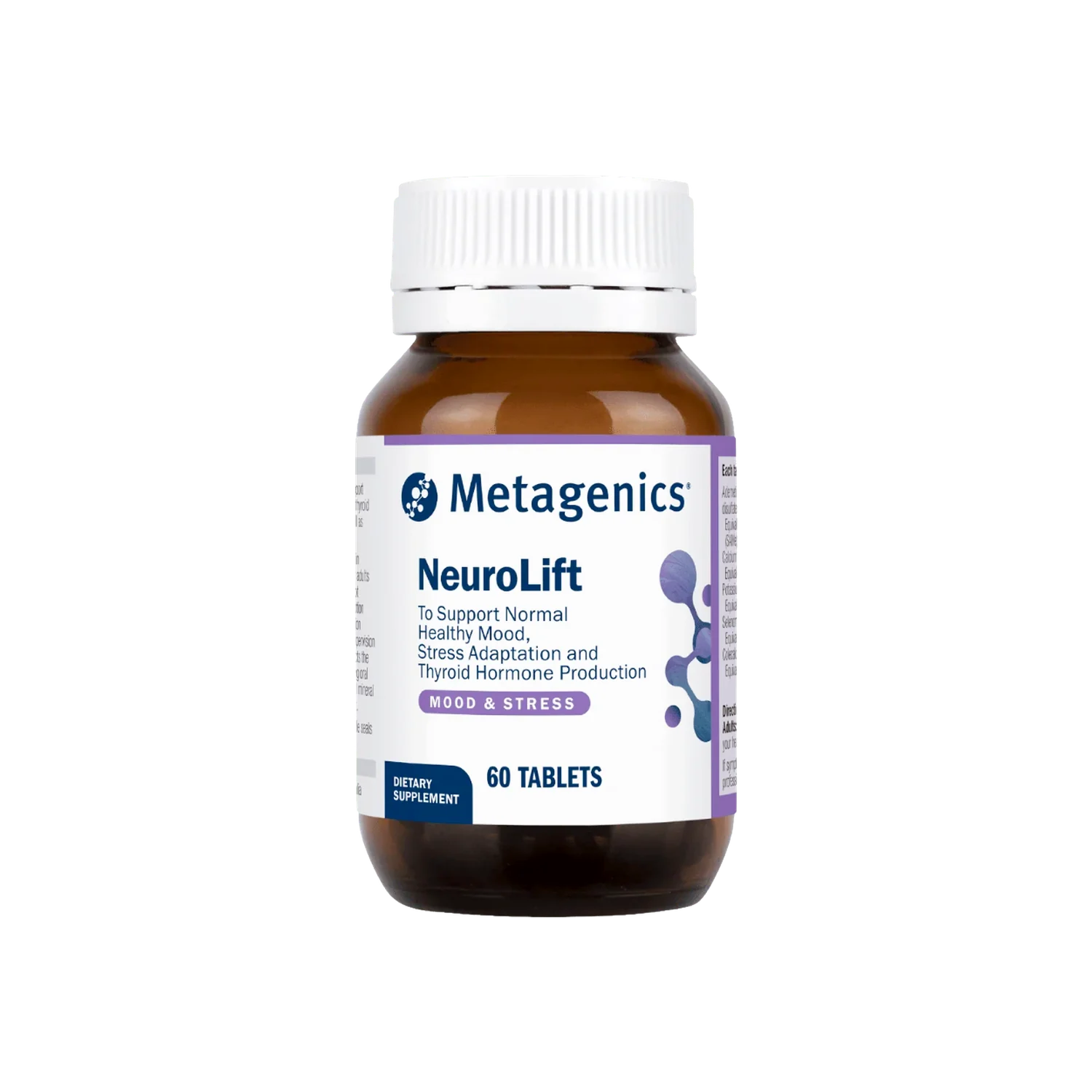
Neuro Lift is a twice-daily adult tablet with SAMe, folinic acid, iodine, selenium and four botanicals, itemised amount by amount and with no added sugar. It is not for children. If you have been comparing where to buy brain supplements for your own use, start with the panel.
Check Availability & PricingHow little active ingredient actually fits
Two examples make the constraint concrete. Omega-3 trials in children have generally used several hundred to over a thousand milligrams of combined EPA and DHA a day. A fish or algal oil gummy has to carry that oil inside a sugar matrix without going rancid or tasting of fish, and the practical result is that most gummy versions supply a small fraction of the trial amounts. A parent buying the gummy is not buying a smaller version of the study; they are buying a different thing with the same words on the front.
Herbal extracts have the same problem. Where children's trials of botanicals have been run at all, they have typically used a few hundred milligrams of standardised extract daily. Fitting that into a gummy alongside the sweetener and the gelling agent is difficult, and fitting three or four such extracts in is not possible. When a children's brain gummy lists six botanical names, the amounts are almost always tiny, and where they sit inside a proprietary blend you cannot check at all.
There is a second, less obvious issue: consistency. Gummies are made by depositing a hot liquid into moulds, and actives can settle or degrade unevenly, which is one reason independent testing programmes have repeatedly reported gummy supplements deviating from their label amounts more often than tablets. Manufacturers commonly add an overage at production to compensate for losses over shelf life, which means the amount in the jar at month one and month eighteen are not the same number.
A gummy is a delivery format borrowed from the confectionery aisle. It is very good at getting micrograms into a reluctant child and very bad at getting grams into anyone.
Why sweet formats invite over-consumption
This is the part that matters most and gets the least space on a sales page. A gummy is engineered to be pleasant. It is sweet, it is chewy, it comes in a jar, and to a six-year-old it is indistinguishable from a sweet. Telling a child that this particular sweet is medicine and they may have exactly two is a rule that works right up until the moment nobody is watching.
The consequences depend on what is in the jar. For water-soluble vitamins the usual outcome of a handful is an upset stomach and expensive urine. For the fat-soluble vitamins A and D, repeated over-consumption can accumulate. For iron the hazard is more serious: accidental iron overdose has long been recognised as a cause of poisoning in young children, which is precisely why most children's gummies leave iron out altogether, and why an adult iron supplement in a sweet-looking format would be a genuinely bad idea. Melatonin gummies deserve their own mention, since paediatric ingestions reported to poison centres have risen sharply over the past decade as the category has grown.
The practical response is unglamorous. Treat every supplement as medicine: a child-resistant cap, a high shelf, out of sight rather than on the breakfast table, and a household rule that an adult hands them over. That single habit removes most of the risk the format introduces.
What the evidence supports for children's concentration
Strip out the marketing and the picture is narrower than the shelf suggests. Correcting a genuine deficiency has the clearest support: iron deficiency is associated with poorer attention in children and treating it helps, iodine is required for normal thyroid hormone production and therefore normal development, and vitamin B12 and vitamin D shortfalls have well-documented effects on energy and mood. All of these are matters for a blood test and a clinician, not a guess in a shop.
Omega-3 supplementation in children has produced mixed results, with the more encouraging findings in children who were low to begin with or who had reading difficulties, and unimpressive results in well-nourished groups; the same dependence on starting status runs through the adult literature on omega-3 DHA dosage for brain health. Multivitamin studies in well-fed children have generally shown little effect on cognition, and the adult picture is the same once you sort which vitamins for memory and focus are worth taking from the ones sold on implication. That is not surprising: topping up a nutrient that is already adequate rarely does anything measurable.
What consistently does matter is the boring stuff, which we cover in detail in our guide to the school-day inputs that shape a child's focus: sleep duration appropriate for their age, a breakfast built on protein and fibre rather than sugar alone, daily physical activity and a screen routine that does not eat into bedtime.
What to check before buying the best brain booster supplement for kids
Most parents looking for the best brain booster supplement for kids never turn the pack over, which is a shame, because the panel answers most of the questions. If you have weighed all of that and still want a product, check the sugar per serving and multiply by seven. Check that every active is listed with its own amount rather than inside a proprietary blend. Check the age range the dose was designed for, since a product labelled four and up rarely adjusts for a fifteen-year-old. Check for third-party testing marks, which matter more in gummies than in tablets given the label-accuracy issues above.
Then check what is not there. No iron in a sweet format is a good sign, not a gap. No melatonin in a daytime product is a good sign. And no claim about intelligence, grades or focus that a regulator would find interesting is the best sign of all. Parents searching for the best brain supplement for children are usually being sold certainty that the evidence does not support, and the labels that promise least tend to be the ones written by people who read the research.
What a children's gummy cannot do
Plainly: no supplement discussed here treats, prevents or reverses any condition, and none has been shown to raise intelligence, grades or academic performance in a well-nourished child. Attention difficulties, learning differences, persistent tiredness and low mood in children are medical and educational matters that deserve proper assessment. A jar bought on a search result is not an assessment, and delaying one because a supplement seems to be helping is the genuine risk in this category.
A gummy also cannot fix a sleep debt, replace breakfast or offset an evening of screens. If a child is short of sleep, that is the intervention with the strongest evidence behind it and no product competes with it. Nothing here is medical advice, and any supplement for a child should be discussed with a paediatrician or pharmacist first, particularly if the child takes any medication.
Medical note: Neuro Lift is an adult supplement and is not intended for children. It contains St John's Wort, which interacts with many prescription medicines including the contraceptive pill and antidepressants. This article is general information, not medical advice. Speak to a doctor, pharmacist or paediatrician before giving any supplement to a child.
Scientific references
- Harvard T.H. Chan School of Public Health, The Nutrition Source — Added Sugar in the Diet
- Mayo Clinic — Nutrition for kids: Guidelines for a healthy diet
- NIH Office of Dietary Supplements — Iron, including accidental overdose in children
- NIH Office of Dietary Supplements — nutrient fact sheets and intake reference values
- NIH NCCIH — Dietary and Herbal Supplements
An adult formula with the amounts written down
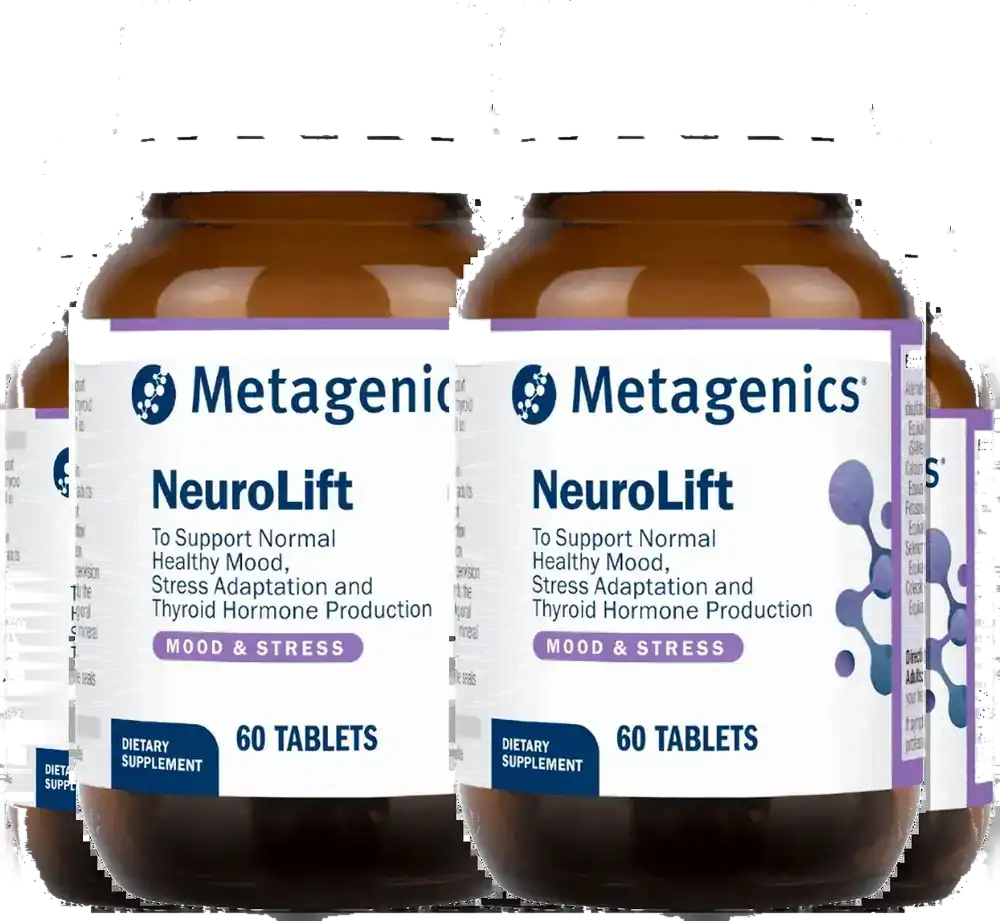
No sugar, no gummy matrix, no proprietary blend — SAMe, folinic acid, iodine, selenium, vitamin D3 and four standardised botanicals in a twice-daily tablet for adults. See the full Neuro Lift ingredient breakdown before you buy.
See Availability on the Official Store