Lion's Mane Mushroom: Brain Benefits and the Facts Behind the Hype
Quick Answer: What Does Lion's Mane Do for the Brain?
Lion's mane is an edible mushroom whose compounds, in lab and animal studies, prompt the body to make more nerve growth factor and appear to support BDNF, two proteins that help neurons grow and repair. People take it to support everyday clarity and memory that builds over weeks, not hours. The human evidence is early, so treat it as support, not a cure for anything.
- Mechanism: hericenones and erinacines nudge NGF and BDNF upward.
- Timeline: effects accumulate over weeks; the key study ran 16 weeks.
- Honest limit: promising, but not proof it treats any disease.
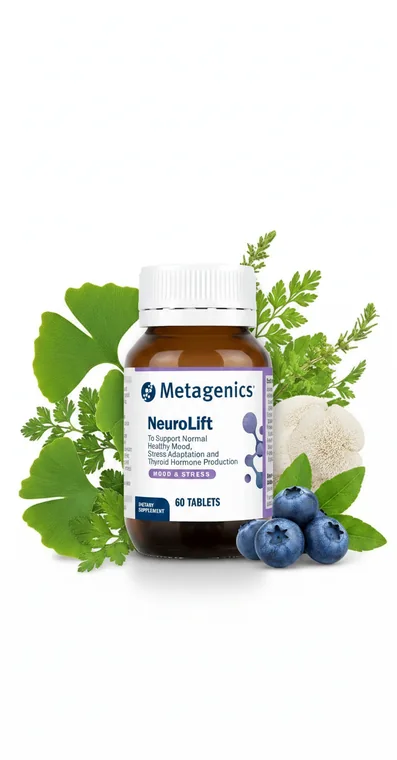
Every few years a single ingredient becomes the face of the whole brain-supplement aisle, and right now that ingredient is lion's mane. It shows up in coffee, in gummies, in tinctures and in nearly every serious nootropic stack, usually attached to a claim about regrowing your brain. So it is worth separating what this mushroom is actually understood to do from what a caption on a fifteen-second video promises. Lion's mane (botanical name Hericium erinaceus) is a real, edible fungus with a genuinely unusual biology, and the honest version of its story is more interesting than the hype, because it comes with dates, doses and a few important caveats.
This guide walks through how lion's mane interacts with nerve growth factor and BDNF, what the most-cited human study really found, how much people take and how long it takes to notice anything, and where a mushroom like this sensibly fits into a broader formula. We will keep the lab findings and the real-world expectations in separate columns, because conflating the two is exactly how this category earns its bad reputation.
What lion's mane is, and why it looks nothing like other mushrooms
Lion's mane is the shaggy, white, cascading fungus you have probably seen photographed looking like a frozen waterfall or, yes, a lion's mane. It has been eaten and brewed in East Asian food and traditional practice for centuries, both as a culinary mushroom with a mild seafood-like flavour and as a tonic. What pulled it out of the kitchen and into laboratories is a family of compounds it produces: hericenones, concentrated in the fruiting body, and erinacines, concentrated in the mycelium. These are the molecules the research keeps circling back to, and they are the reason the sourcing question later in this article matters so much.
That biological quirk is the whole point. Most mushrooms marketed for wellness lean on immune-modulating fibres called beta-glucans. Lion's mane has those too, but its distinct pitch is neurological, and that pitch rests on how those hericenones and erinacines appear to interact with the signalling proteins that keep neurons alive and connected.
How lion's mane supports NGF and BDNF for neuron health
Two proteins do a lot of quiet work in your nervous system. Nerve growth factor (NGF) helps certain neurons survive, mature and maintain their connections; it is part of a family called neurotrophins. Brain-derived neurotrophic factor (BDNF) is a related neurotrophin heavily involved in learning, memory and the brain's ability to form and reorganise connections, a property researchers call neuroplasticity. When people talk about a supplement being good for long-term brain health rather than short-term stimulation, this is usually the machinery they mean.
In cell cultures and in animal studies, compounds from lion's mane have repeatedly encouraged cells to produce more NGF, and several studies point to supportive effects on BDNF as well. That is a meaningful and consistent laboratory signal, and it is the mechanistic reason lion's mane gets grouped with genuine cognitive ingredients rather than with flavour-of-the-month powders. It is also where honesty has to enter the room: a compound raising NGF in a petri dish or in a rodent is a promising lead, not a promise about your Tuesday afternoon. The molecule that reaches a neuron in a dish took a very different journey than the capsule that has to survive your digestion first. Keep that gap in mind every time you read the words "nerve regeneration" on a label.
What the research actually shows in people
The study everyone cites is a small Japanese randomised, double-blind, placebo-controlled trial published in 2009. Older adults with mild cognitive impairment took a lion's mane fruiting-body preparation for 16 weeks and scored better on a cognitive scale than the placebo group at several checkpoints during supplementation. Then came the detail that gets left out of most social posts: after the participants stopped taking it, their scores drifted back down. Two honest lessons come out of that. First, the benefit appeared to depend on continued use. Second, "mild cognitive impairment in older adults" is a specific population, and results there do not automatically transfer to a healthy thirty-year-old wanting sharper focus for work.
Since then, a handful of small human studies have looked at mood, subjective wellbeing and short-term cognitive measures, with results that are encouraging but modest and mixed. The trials are small, short and use different preparations, which makes them hard to pool. The fair summary is this: lion's mane has a plausible mechanism and some supportive early human data, and it does not yet have the large, long, repeated trials that would let anyone honestly say it is proven to improve memory in healthy adults. Anyone telling you it is proven is selling you certainty they do not have. If you want the wider context on where mushroom nootropics sit against better-studied ingredients, our overview of what nootropic supplements are and their real benefits lays out the evidence tiers plainly.
Want lion's mane inside a fully itemised stack?
Neuro Lift builds a mushroom-inclusive nootropic formula where every ingredient and amount is printed on the panel — no proprietary blend hiding how much lion's mane you actually get. See the current line-up and availability before you decide.
Check Availability & PricingHow much lion's mane should you take per day?
Common daily doses on supplement labels and in studies land between 1,000 and 2,000mg, usually split into two servings taken with food. The original 2009 trial used 3,000mg per day of a powdered fruiting-body product. The number on the front of the bottle, though, is close to meaningless on its own, because it does not tell you what you are actually swallowing.
The variable that matters is the preparation. Three things hide behind identical milligram figures:
- Fruiting body vs mycelium. The fruiting body is the mushroom you would recognise and is richer in hericenones; mycelium is the root-like network, richer in erinacines and often grown on grain. Mycelium-on-grain products can carry a lot of leftover starch, so "1,000mg" may include filler grain rather than 1,000mg of active mushroom.
- Extract vs raw powder. A hot-water or dual extract concentrates the active compounds; raw dried powder does not. A "10:1" extract is not directly comparable to a gram of plain powder.
- Standardisation. A minority of products state a beta-glucan percentage or otherwise standardise. Most do not, which is exactly why the raw dose is a weak guide.
The practical takeaway: judge a lion's mane product on whether it names the part used and the extract type, not just the milligrams. This is the same label-reading discipline that separates a serious brain formula from a decorated one, and it is worth applying to magnesium and every other ingredient too, which is why we walk through it in our guide to magnesium L-threonate dosing for memory.
How long does it take, and why patience is the whole game
If you take lion's mane on Monday expecting a Tuesday transformation, you will conclude it does nothing, and you will have tested it wrong. Because the proposed benefit runs through neurotrophic support rather than a stimulant hit, the effect is cumulative. The landmark study measured its result at 16 weeks. Real-world users who report benefit usually describe a gradual lift over several weeks of daily use, the sort of thing you notice more in hindsight than in the moment. This is the opposite of caffeine, and setting that expectation up front is the single best thing you can do to evaluate it fairly. A slow builder rewards consistency and punishes the two-week trial.
Three common myths, answered honestly
Myth 1: "Lion's mane regrows your brain." The NGF and BDNF findings are real and genuinely interesting, but "supports the proteins involved in neuron maintenance in lab and animal models" is a very different claim from "regrows your brain," and only the first is defensible. Nothing here diagnoses, treats, cures or prevents any disease, and no supplement can undo a medical condition. The neuroplasticity story is a reason to be curious, not a reason to expect a new brain.
Myth 2: "All lion's mane is the same, so buy the cheapest." As the dosing section showed, a cheap tub of mycelium-on-grain powder and a concentrated fruiting-body extract can share a milligram number while delivering very different amounts of the compounds that matter. Cheapest-per-gram is often most-filler-per-gram.
Myth 3: "If a little is good, megadosing is better." There is no evidence that piling on grams beyond studied ranges improves anything, and it is the fastest way to the mild digestive upset some people report. Studied doses exist for a reason; more is not a strategy.
The interesting thing about lion's mane is not that it is a miracle. It is that a culinary mushroom has a real, repeatable laboratory effect on the proteins that keep neurons healthy. That is worth taking seriously precisely because you do not have to exaggerate it.
Does lion's mane have side effects?
In the human studies to date, lion's mane has been well tolerated, with the most common complaint being mild stomach or digestive upset, which is easily reduced by taking it with food. The one group that should be genuinely cautious is anyone with a mushroom or mould allergy, since this is a fungus; there are rare case reports of skin or breathing reactions. Long-term human safety data is still thin simply because the large, multi-year trials have not been done. As with any supplement, if you are pregnant, nursing, on medication or managing a health condition, clear it with a doctor or pharmacist first rather than assuming "natural" means "no interactions."
Where lion's mane fits in Neuro Lift's stack
A single ingredient is rarely the interesting unit; the formula is. Lion's mane pairs logically with nutrients that support the same neuron machinery from a different angle, which is why thoughtful stacks often set it alongside magnesium L-threonate and the omega-3 fatty acid DHA rather than relying on the mushroom alone. Neuro Lift is built around that combination logic, with the added, non-negotiable feature that every ingredient and its amount is printed on the panel, so you can see exactly how much lion's mane and how much of everything else you are getting. That transparency is the whole reason to prefer a named formula over a proprietary blend: you can verify the label before you own the bottle, and you can check whether the lion's mane dose actually lands in the range the studies used.
If you are building a routine rather than chasing a single hero ingredient, the sensible foundation looks less exciting and works better: sleep first, then a small number of well-dosed, disclosed ingredients taken consistently for long enough to judge. Lion's mane earns a place in that routine on the strength of its mechanism and its early human data, held to the honest expectation that it is a slow, supportive builder and not a switch.
Medical note: this article is general information, not medical advice. Lion's mane is a mushroom; avoid it if you have a mushroom or mould allergy. Speak to a doctor or pharmacist before starting any supplement, and especially if you are pregnant, nursing, taking medication or managing a health condition. Nothing here is intended to diagnose, treat, cure or prevent any disease.
Scientific references
- Mori K. et al. (2009) — Improving effects of Hericium erinaceus on mild cognitive impairment, Phytotherapy Research
- National Cancer Institute — Medicinal Mushrooms (PDQ), health professional summary
- Amen Y. et al. (2026) — Chemistry and bioactivities of erinacines from Hericium fungi, Journal of Natural Medicines
- Docherty S. et al. (2023) — The Acute and Chronic Effects of Lion's Mane Mushroom Supplementation on Cognitive Function, Stress and Mood in Young Adults, Nutrients
- NIH Office of Dietary Supplements — supplement fact sheets
Related reading
See how much lion's mane is actually in the bottle
If reading this made you a label-reader, start with a formula that hides nothing. Check the full Neuro Lift ingredient breakdown, then see current availability on the official store.
See Availability on the Official Store